Monday, November 14, 2011

Blog Post #2: Climate

Polar Ice Caps Melting

The poles are melting. Whether you believe in “global warming” or not, you cannot deny the fact that polar bears are losing their homes. The earth is warming, the ice is melting, and as a result, the water is rising. Being able to see a trend in the melting that has already occurred is the key in predicting what will become of our future Ice sheets. There are so many aspects of global climate change to look at, but this one is quite visual.

The EPA explains how the Arctic is expected to be the part of the world with the greatest amount of warming because its albedo will change significantly as the ice melts. The reflectivity of the ice will turn into absorption. Therefore, the amount of heat held at the Arcitc will increase drastically. Satelitte data shows that the amount of ice has decreased by about 3% per decade since 1860.

NASA’s article, NASA Finds Polar Ice Adding More to Rising Seas, suggests that the rate that ice sheets are melting is accelerating the rate of sea level rising much faster than expected. It is also shown that the amount of ice mass being lost is increasing year after year. For example, the amount of ice mass being lost this year in 2011 is greater than what was lost in 2010, which is greater than what was lost in 2009, and so on.

The Earth Science Department at the University of California backs up the idea that the amount of melting is increasing year after year.  It is uncertain to tell what the exact future will hold.  Their article, Melting Ice Sheets Now Largest Contributor  to Sea Level Rise, states that ice sheets hold a much higher mass than mountain glaciers.


Sources:


http://www.ess.uci.edu/news/searise201103

Blog Post #1: Weather

Hurricane Irene

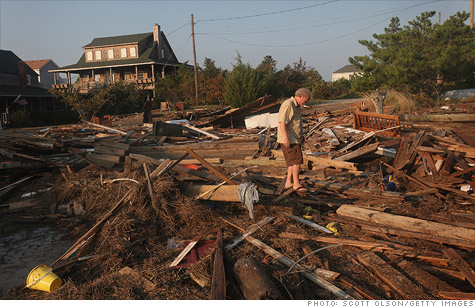
Hurricane Irene, of late August, 2011, was something to worry about along the East coast, all the way up to New England. She was a “disappointment” to some, while others saw destruction that they had only seen on television before. Some people took it seriously-maybe too seriously- and others blew it off in denial believing that it was nothing to be concerned about. The outcome of Irene’s presence, or lack-there-of, is interesting to follow up on two months later.

         NPR’s article entitled Irene: Wet, Deadly and Expensive as Cleanup Begins describes how New Englanders for the most part were not well prepared for Irene. In some places, they were not expecting the hurricane to be as powerful as it was, or not even reach them at all. The flash flooding was also much worse than anticipated. The flooding caused other devastation and destruction, too. On the other hand, some people that were very prepared for Irene did not get affected much by the storm. Irene hit places that hurricanes do not generally reach, and she left some of the usual areas to be struck hard alone. 

        NASA’s article, Rainfall from Hurricane Irene, discusses how Hurricane Irene brought enough rain to cause disastrous flooding.  The rainfall lasted all the way up through New Hampshire and Vermont and caused damage that was not expected. The article explains how two places that receive the same amount of rainfall can have very different outcomes. This is because the severity of flooding is dependent on other factors, such as vegetation and land use. This explains why Vermont was hit so much harder than other states.

            CNN’s article, Hurricane Irene Damage Could Reach Billions, discusses the impact that Irene had on the east coast. Although not as severe as it could have been, the hurricane caused a considerable amount of damage, and a few dozen deaths. Power outages were a huge issue with the hurricane. Some were without power for over a week. The article describes how the hurricane was weakened by the fact that it hit land three separate times on its way up the east coast. This is why some places along the coast did not get hit so bad from the storm. Thankfully, the storm did not cause nearly as much damage as Hurricane Katrina. However, the storm did bring the east coast surprises that most of us were not expecting.


Sources: